


How to Make the Most of Your Suburban Yard: Food, Flowers, Wildlife, and Joy

A suburban yard doesn't have to be just grass, mulch, and a few shrubs. Even a regular neighborhood yard can become a place that feeds your family, supports pollinators, welcomes wildlife, creates beauty, and gives you peaceful places to enjoy being outside.
I'll use our own 9,237 sq. ft. yard as an example, not as a “do all of this” checklist, but as proof that small changes over time can turn an ordinary suburban yard into something alive, useful, and deeply personal.
suburban front yard with lifeless turf grass suburban front yard with pollinator gardens and edible landscaping
Your Yard Can Be More Than Lawn
Many suburban yards are treated like blank green carpets, but they can be so much more!
A yard can be:
a garden
a habitat
a food source
a place to rest
a classroom
a little ecosystem
You don't need acres. You need curiosity, patience, and a willingness to start small.
Our yard is 9,237 square feet (I looked it up on the auditor's site), and over time, we've tucked a lot of life into it. I can't emphasize enough the joy and education I've gotten from our yard transformation!
2. Think in Layers, Not One Big Makeover
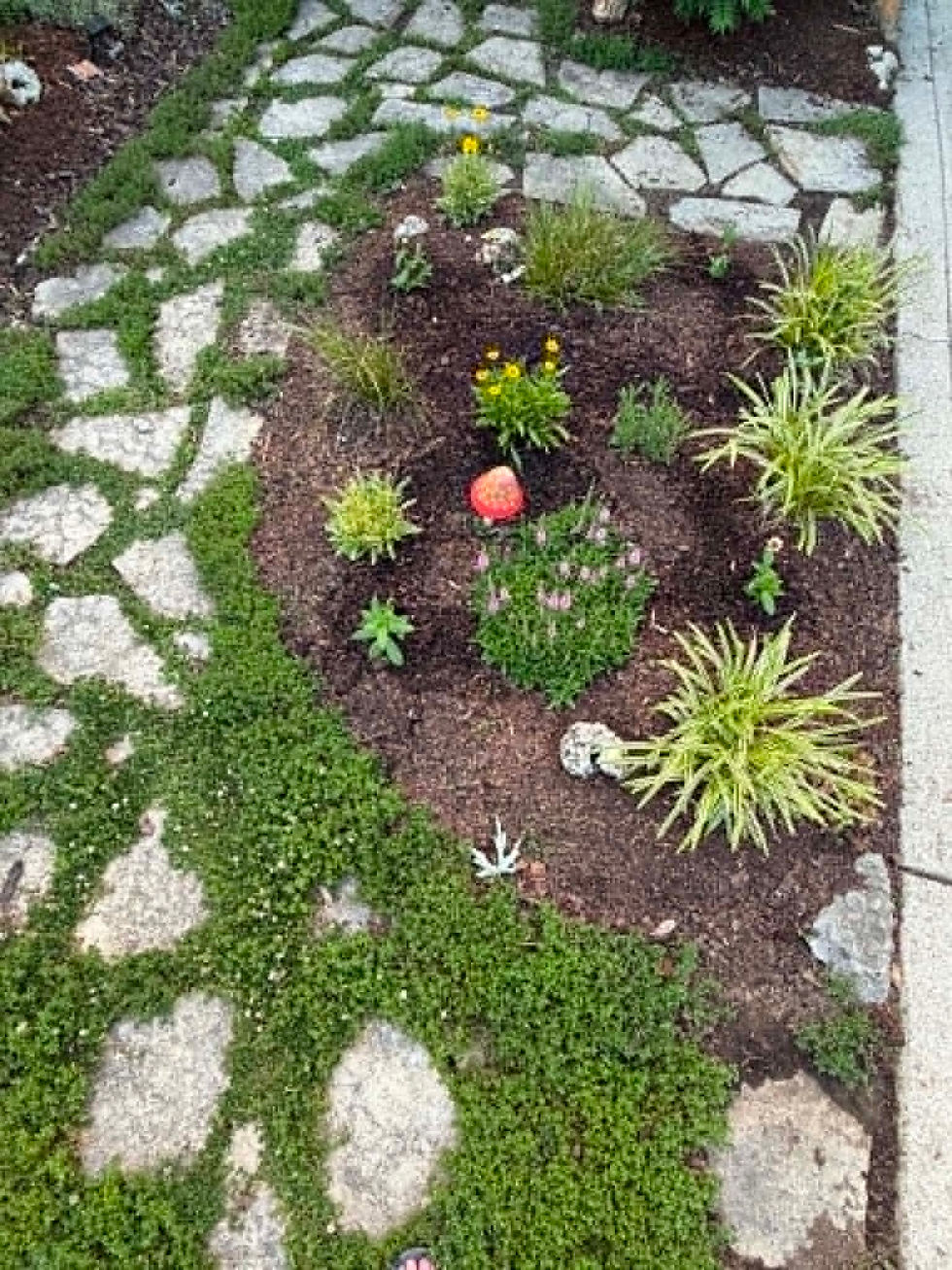
We didn't transform our yard overnight; it was done in sections or "layers".
Layers might include:
food
flowers
water
wildlife habitat
sitting spaces
paths
small structures like a greenhouse
chemical-free practices
A good yard isn't built in one weekend. It evolves. Instead of asking, "How do I redo my whole yard?" ask, "What layer can I add next?’”
3. Edible Landscaping: Food Mixed Into Beauty
One of the easiest ways to make a yard more useful without making it feel like a farm is with edible landscaping. Our front lawn has been reduced by 75% by creating a kind of "food forest", utilizing an edible landscape design with an side order of pollinator plants.
Ideas to include:
herbs mixed into flower beds
berry bushes
fruiting shrubs or trees if you have room
edible plants near patios or walkways
mixing pretty and practical plants together
Food gardens don't have to be hidden in a back corner. Edible plants can be beautiful. I'm not one to plop tomato plants into the front yard, but hey, if that's the only spot you have full sun, I'm sure you can make it work!
Edible landscaping is where the yard starts whispering, ‘I’m pretty, but I also brought snacks.’”
A wonderful resource on this topic is Michael Judd's book Edible Landscaping with a Permaculture Twist. We met Michael at a seminar and his suggestions radically transformed many aspects of our landscape choices!
Edible landscape in a suburban front yard paw paw fruit on a paw paw tree A Goumi berry bush in a front yard Blackberries in front of a fence Elderberries in the suburban landscape Raspberries growing in a back yard
4. Raised Bed Gardens: A Manageable Way to Grow Food
Raised beds make food gardening feel more organized and manageable, especially in suburban yards.
Some raised bed elements:

vegetables
herbs
easier soil control
defined growing spaces
how they help keep gardening from feeling chaotic
Raised beds are a great entry point for growing food without turning the whole yard into a vegetable field. My recommendation is to always start small. If you build (4) 16 sq.ft² beds on your first gardening try, you might get overwhelmed. Best to start with one and grow from there.
5. Backyard Chickens: Personality, Eggs, and Garden Help
This one isn't for everyone, but it's been awesome for us. It's something I wanted to add into the mix, so I did my research (then convinced my husband) and we've now had backyard chickens for almost 12 years. Chickens as part of our backyard system, not just pets (which they are not - they're spoiled, but not my pets, lol)) or egg machines.
With chickens you get:
fresh eggs
compost assistance
entertainment
connection to food
Chickens can be wonderful, but they are a real commitment. They are part of the ecosystem and the chore chart. They do add to your responsibilities and you need to make sure they fit your actual life and neighborhood.
A great resource for backyard chickens is Patricia Foreman's book, City Chicks. Chickens are more work than you think if you haven't done your homework and way less than you feared if you did.
Green Queen backyard egg laying hen Backyard chicken coop Green Queen backyard chickens egg laying hens
6. Water Features: Why Our Three Ponds Matter
I absolutely love our ponds! They provide relaxation, beauty and habitat. Ours aren't necessarily fancy and they definitely aren't huge, but even a teeny pond can become a habitat for wildlife.
Reasons to add a water feature:

birds drinking
dragonflies
frogs or other visitors if applicable
sound and calm
water as habitat
different pond sizes and options
even a small water source matters
Water changes the whole feeling of a yard. It invites life in, no matter what the size.
Add water, and the yard suddenly has a heartbeat!
7. Pollinator Gardens: Flowers With a Purpose
Where do I begin?! A pollinator garden is not just a flower bed. It is a restaurant, nursery, rest stop, and tiny airport. I've done whole posts just on this topic. We need more pollinator habitat, which is one of the reasons I joined Franklin County Pollinator Pathway. Butterflies, bees, moths, and all our pollinators are declining due to habitat loss. This is 100% something we can change, right in our own yards. Big or small, they all make a difference. Pollinator gardens are beautiful, but they are also functional. They feed and shelter life.
Some thoughts:
native plants
host plants
nectar plants
bloom succession
butterflies, bees, moths, hummingbirds
Nothing needs to be perfect; it just needs planted.
Pollinator gardens in a suburban front yard Monarch butterfly in a pollinator garden A field of Rudbeckia, Black-eyed Susans A Black Swallowtail butterfly on a woman's finger Bumblebees on a coneflower, Echinacea A suburban front yard pollinator garden and edible landscape
8. The Greenhouse: Extending the Season and the Dreaming
This is another "layer" that won't be for everyone, so I'll keep it short. I love my greenhouse; it's fun and cute and all the things. What it isn't - because it's Ohio - is a place to grow things in the winter. You'll blow so much money trying to heat it, you'll probably lose your house, lol!
What they are:

starting seeds
protecting plants
extending the growing season
having a place to dream in late winter
experimenting
learning
A greenhouse doesn't have to be fancy to be useful. It's a place to start earlier, learn more, and stay connected to the garden. And for that, it's worth every dime.
9. Walking Paths: Making the Yard Feel Like a Place to Explore
Paths turn a yard into an experience. I created paths in our yard because of function, then realized how they made me feel. A path can help you access the parts of your garden/landscaping you need to reach. They can also make you feel like you're on a little adventure, wondering what you'll see at the end (work with me here). I've had several kids mention our paths and how much they love them. They don't care why I have them, they just cared how it made them feel. Score!
Paths are like:
guiding movement
creating little destinations
making garden areas feel intentional
inviting people to slow down
connecting different sections of the yard
Paths make even a small yard feel bigger and more thoughtful.
A path tells your feet, "Come this way. There is something to notice.’”
Garden path in a suburban backyard A walking path through a pollinator garden A walking path to a pond with children
10. Sitting Areas: Don’t Forget to Enjoy the Yard
Many people build gardens and then forget to make places to actually sit in them. What a shame! You should absolutely have a place to enjoy the fruits of your labor. I pay our bills, write my blog posts, record my podcast and anything I can think of while sitting in one of our sitting areas. Look, I live in Ohio, so our nice outside time is limited! This is one of the top "layers" I'd add because of its high value to the garden ...and the soul.
The whys:
morning coffee spots
places near ponds
places to watch birds or butterflies
quiet corners
making the yard livable, not just productive
A yard should not only be work. It should also be a place to exhale. If you create a beautiful yard but never sit in it, the garden becomes a very demanding roommate!
Pesticide free zone sign in a garden A sitting area near a pond in a suburban backyard
11. Chemical-Free Yard Care: Healthier for Everything
While we all take a second, starry-eyed look at a perfect green lawn, those emerald carpets are usually void of life. I marvel at the fireflies I see in our yard, lighting up the night. We've chosen not to spray our lawn (even from a "natural" company" and not one person has made a negative comment about our lawn...but we've gotten loads of compliments on our flowers, trees and....fireflies.
A chemical-free yard may not be flawless, but it is alive. Consider....
avoiding pesticides
supporting insects
protecting birds, pets, kids, soil, and water
accepting some imperfection
choosing healthier practices
working with nature instead of constantly fighting it
12. How to Start Without Getting Overwhelmed
Choose one area to get started:
grow food
help butterflies
add water
create a sitting area
plant a native shrub
start a small raised bed
stop spraying
add a path
plant herbs near the kitchen door
Don't try to build the whole dream in one season.
Your yard can feed you, calm you, teach you, entertain you, and support wildlife. It doesn't have to look like anyone else’s yard, nor does it have to be perfect. It just has to become more alive, one choice at a time.
Your suburban yard may be smaller than a farm, but it can still hold food, flowers, water, wildlife, quiet places, messy lessons, and more life than you ever expected.
Backyard habitat and gardens Backyard habitat and chickens with coop Suburban front yard habitat and pollinator garden Overview of a backyard chicken coop setup and habitats Suburban front yard landscaping Front yard pocket pond


Great post. Very in formative. It is a nice place to visit and to gather ideas.