


How to Attract Birds to Your Yard: Food, Water, Shelter, and Native Plants

When I was younger, I used to think that "birding" was boring and kind of lame. Well...color me lame now! I've shared this before, but I have a passion for rainforests and the first one I ever went to (Peruvian Amazon) was for an educational event and one of the classes was with a Cornell ornithologist. Short version: I got to see a lot of cool birds.
After such a cool experience, you do with what you have, because what one usually doesn't have is endless time and money to chase cool birds around the world's rainforests (sadly). So, I started paying attention to the birds in my own backyard. Turns out they're cooler than I thought.
As we transformed our yard from lifeless turf grass to habitats for birds, bees, butterflies and all kinds of cool things, it's been amazing how nature has found our little piece of the planet. Our 9,237 ft² piece of the planet, to be exact.
So, how do you attract more birds to your outdoor living space? With ever increasing pressure for nature space, sometimes just having a bird feeder and a water source is more than enough to catch a passing bird, looking for a snack. But, if you have a bit more space and a desire to do a little more, then here are some tips:
Provide fresh, clean water.
Bird baths, big or small. Shallow trays work well, even ant moats are attractive to little chickadees looking for a sip.
If you choose to provide water, it's best to clean it weekly, more often when temps are really high. I've also recently had really good luck with copper disks, in helping to reduce algae growth in the bird baths (but I still need to keep the water changed).
concrete birdbath in garden
Food
Simple and easy: bird feeder with good quality seed. Ideally, I'd look for a feeder that you can easily clean. I’ve been using this Kingsyard feeder for a few weeks now, and it has become my favorite. You can use discount code BYCOLUMB20 for 20% off.
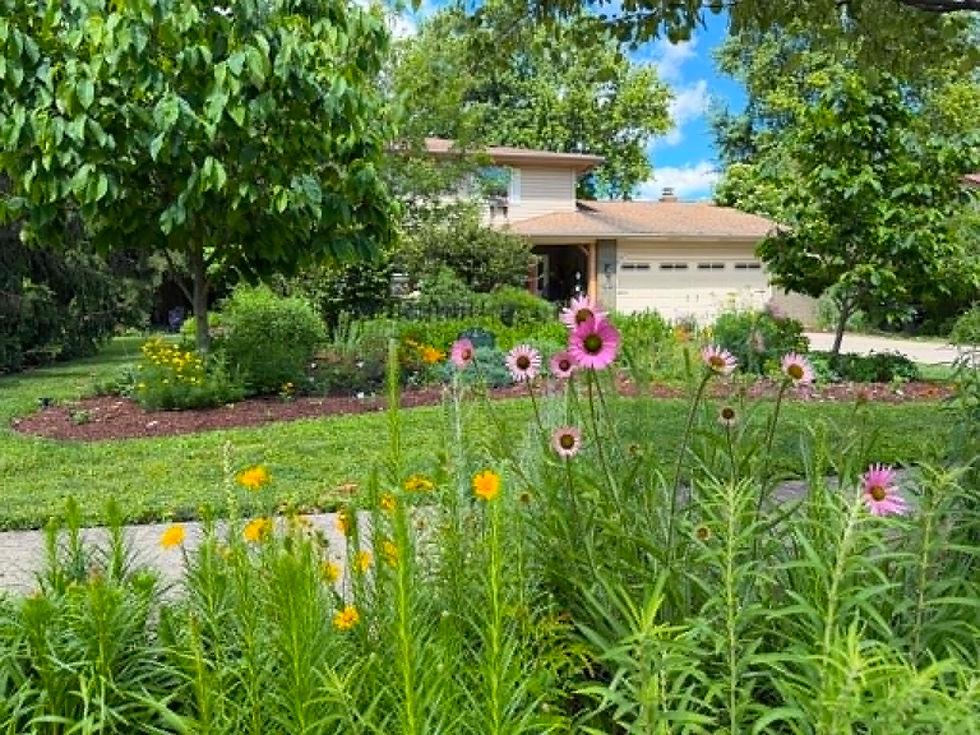
Native plants: native plants provide seed and berries that birds love. Black-eyed Susans, Echinacea (Purple Coneflower) are favorites of the American Goldfinch in our yard, as well as annual zinnias. Bushes like Spicebush, Highbush Cranberry and Elderberry bushes all provide berries. Planting native plants not only feeds birds, they make your yard prettier, too!
Another reason for native plants as it pertains to food: Only native plants are host plants for moths and butterflies. This means they lay their eggs on their own host plants (each species has its own species of host plant). Why? Because when the eggs hatch, out comes the caterpillar and a large majority of birds feed their babies only caterpillars. No native host plants, no caterpillars....no food for baby birds.
If you really get into watching the birds in your yard, adding a camera feeder is pretty fun. I've seen some neat birds on ours and it's a fun way to get up close to your backyard birds.
If you'd like to attract hummingbirds to your yard:
Hummingbird feeders are great, but please don't use commercial, red-dyed liquid. It's harmful to hummingbirds. The best option is a homemade mixture of 4 parts water to 1 part regular granulated sugar (not organic sugar). More info HERE
The best way to invite hummingbirds to your yard is to plant the flowers that attract them, like:
Red Columbine, Trumpet Vine, Cardinal Flower, Bee Balm, annual Salvia and other ideas HERE
Eastern bluebird on red metal bird feeder in backyard Elderberries in a suburban garden Black swallowtail caterpillar on fennel A caterpillar on a lettuce leaf Ruby throat hummingbird on nectar feeder A female Northern Cardinal bird on a camera feeder
Shelter and a place to raise young
This can be as simple as a bird nesting box. That's helpful - but also needs to be cleaned after each clutch.
To take it a step further, adding native bushes and trees are a huge help and beautifies your yard, actually. Did you know that an oak tree is a host plant to over 500 species of butterflies and moths? So, just planting ONE oak tree for shelter and food would be an amazing thing!
Some folks have chosen to keep brush piles in their backyards for birds as well. Wrens (Carolina & House wrens) rely on them as safe havens to forage for insects, hide from predators, and find shelter from harsh weather. Because wrens are cavity nesters, they may even use the dense, tangled roots and branches as a protected nesting site. Some HOAs may have a problem with this, so check first.
You'll be surprised where birds find a place to make a nest! We currently have a clutch of House finches in our hanging fern and have had two clutches of Carolina wrens make nests in our shed. Loads of folks I know have had birds make nests on the wreaths on their front door!
Bird house in a front yard A house wren in a bird house A woodland garden in a suburban landscape wren eggs in a bird nest Carolina wren bird nest in a shed American robin bird nest in a bush
As a last request: reducing or eliminating the use of insecticides (broadly sprayed) would be amazing. The reason is because it kills many, if not most, of the insects that birds need to feed their babies. Kill the insects and your bird population will be reduced.
To find more info on how to attract birds to your yard, check out the National Wildlife Federation's checklist HERE.
*I have included affiliate links in this article. I may receive a small commission on items I've linked, at no extra cost to you. The products I link are items I have used/are using myself, so I can feel confident about sharing them with you.


Comments