


What Is a Host Plant? Why Butterflies Need More Than Pretty Flowers

A host plant is a specific plant that an insect (like a butterfly or moth) relies on to lay its eggs and feed its newly hatched young.
Chatter about host plants and native plants are buzz words all over social media, but what's it all mean?. Almost all host plants are native plants. Because native plants co-evolved alongside local insects over thousands of years, they provide the specific leaves, nectar, and shelter that local caterpillars and butterflies need to survive and reproduce.
spicebush caterpillar on host plant spicebush monarch butterfly laying an egg on host plant milkweed host plant butterfly weed in a garden
Do you long for the days when you saw more butterflies? Ask someone older in your life and ask how many butterflies they used to see as a kid. Chances are, it was a lot more than now. As the suburbs grew, insect & butterfly habitat shrank. Some insects, such as monarch butterflies and specialist bees, have a very narrow range of native plants they can use as food sources for their young and will not reside or raise young in landscapes that don’t include these plants. Native plants can beautify our surroundings and create essential habitats for many creatures.
The entire order of Lepidoptera (butterflies and moths) require host plants
No host plants = no butterflies or moths and that = sadness (to me, anyway!)
This is one of the big reasons that we see fewer and fewer butterflies in our neighborhoods: virtually no one is planting their host plants, but it's so easy!
Provide some good nectar sources to ensure they come to your "restaurant"
Plant their required host plant to make sure they lay their eggs in your yard!
This comes back to "butterflies need more than pretty flowers":
Not every flower produces pollen or nectar (butterflies and moths utilize the nectar from flowers). Hybrids and cultivars (plants with fancy "branded" names) are often (not always) sterile, which means they're virtually void of nutrition (pollen and nectar).
As I said earlier, this is where native plants come in: you can always be sure they're doing the job they're meant to do: provide nutrition and a place where the female butterflies and moths can lay their eggs.
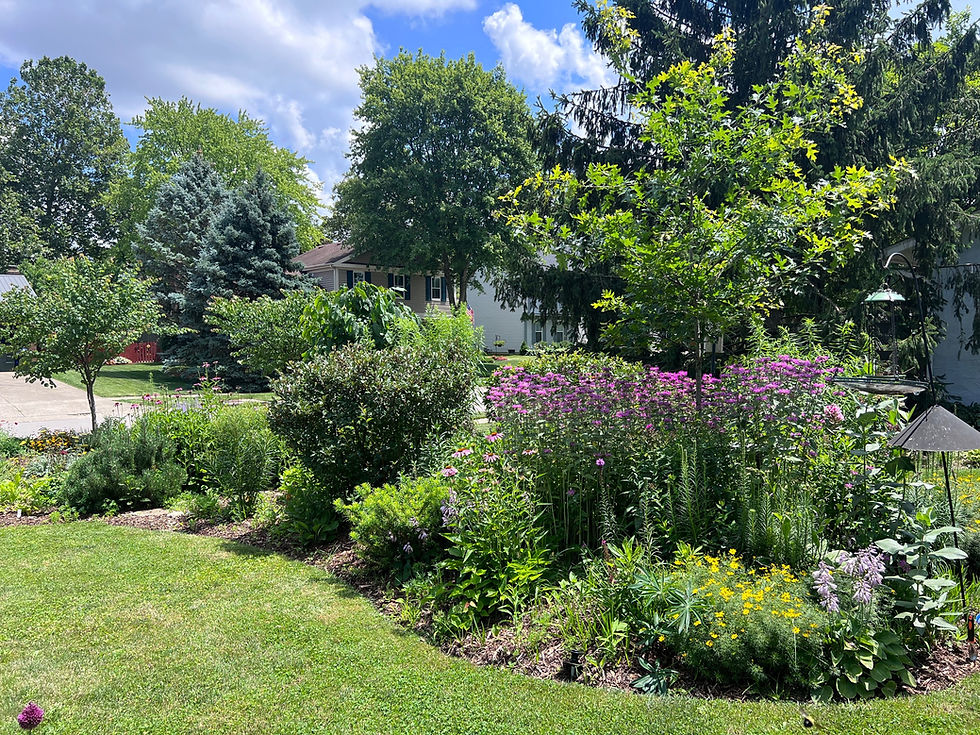
Go ahead and plant the flowers that make you happy - native or not - but also adding in some native plants strikes a really good balance.
One of the most recognized host plant/butterfly relationships is milkweed and the monarch butterfly. Milkweed isn't a weed at all and typically grows in fields. With development and urban sprawl, habitat for milkweed has disappeared from the suburban landscape. This would be a major reason we don't see monarchs in our yards anymore (also lack of nectar sources and pesticide use). But - milkweed is so easy to plant! There are 13 recognized native species of milkweed (Asclepias genus) in Ohio
You can plant milkweed in pots or in the ground, and even in a variety of light.
Here are some common butterfly/host plant duos to get you started:
Black Swallowtail - dill, fennel, parsley; members of the carrot family
Skippers - native grasses (NOT turf grass), sedges and legumes
Zebra Swallowtails - Paw Paw trees only
Great Spangled Fritillary - Native violets
Eastern Tiger Swallowtail - Native trees and shrubs like wild black cherry, tulip poplar, Sweetbay magnolia
As we approach the throws of summer, saving this article for fall planting is the best idea and make your butterfly garden plans, now. Plopping plants in the ground in extreme heat is a setup for failure, unless you have loads of time to baby the plants. Best bet at this point is to plant flowers by seed in the fall and bushes and trees do well through winter if planted mid to late fall.
Here are some great resources that give you more ideas of what host plants go with which butterflies or moths:
*This post contains affiliate links. I may earn a commission on qualifying purchases


Comments