


The Beauty of Edible Landscaping: Growing Food in a Pretty Backyard

We're in prime gardening season, flowers and food alike. Edible plants don’t have to be hidden away in a vegetable garden. They can be part of the beauty of the yard. Edible landscaping lets your yard feed you while still feeling pretty, layered, alive, and intentional.
Some of my favorite plants in our yard are beautiful, useful, and quietly making snacks!
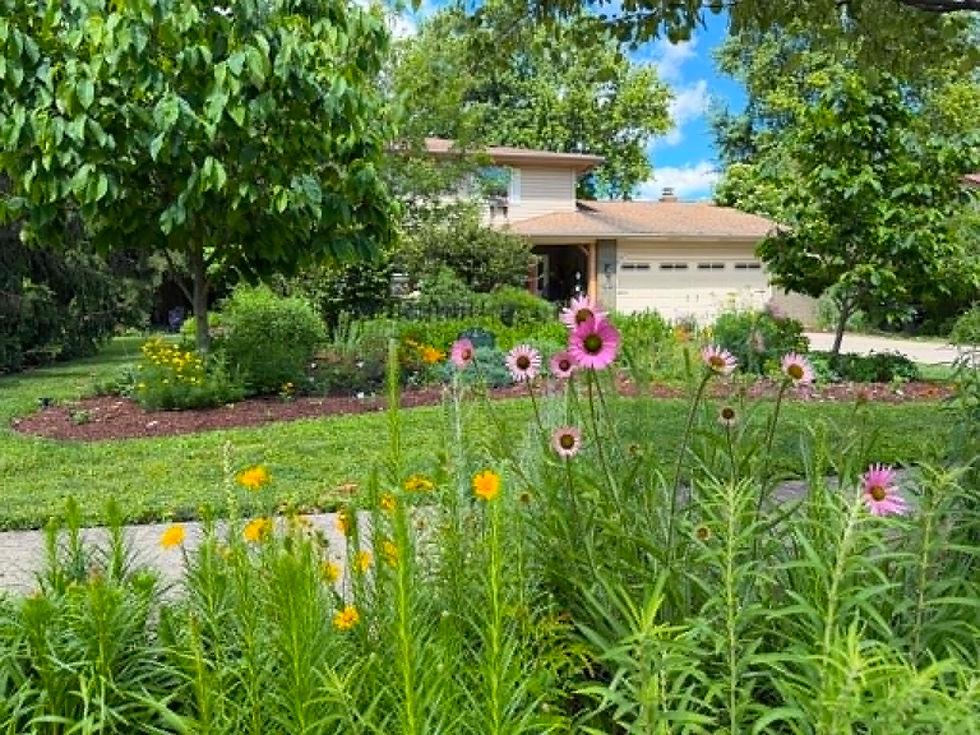
Backyard with edible landscaping Front suburban yard with edible landscaping Front suburban yard with edible landscaping
1. What Is Edible Landscaping?
Edible landscaping is using food-producing plants as part of your regular landscape design. Instead of separating “pretty plants” from “food plants,” you mix them together.
It can include berries, fruit trees, herbs, vegetables, edible flowers, and shrubs.
2. Why I Love It
It makes our yard more useful
It adds texture, flowers, berries, fruit, and seasonal interest
It connects you to your food
It supports birds, pollinators, and wildlife
It’s fun to walk outside and find something to snack on
There's something ridiculously satisfying about walking through your own yard and realizing dessert is growing on a bush!
paw paw fruit on a tree Goumi berries in a suburban landscape Blackberries in a suburban backyard edible landscape plan Raspberries in a suburban backyard edible landscape plan Blackberries in a suburban backyard edible landscape plan Elderberries in a suburban backyard edible landscape plan Child picking Goumi berries in a suburban yard with edible landscaping Hand picking red Goumi berries in a suburban yard Currants in a suburban edible landscaping plan
3. What We Grow in Our Yard
Elderberry bushes: Beautiful flowers, berries, wildlife value, and Elderberry bushes fill up a space nicely.
Goumi berry bushes: Unusual, productive, pretty and crazy nutritious! Also a good “most people don’t know this one” plant.
Pawpaw trees: Native, tropical-looking leaves, unique fruit, and a fun Ohio/native plant connection. It's also the host plant for the Zebra swallowtail butterfly. If you live in Northwest Columbus, please grow some so I can get some Zebra Swallowtail butterflies (LOL).
Currants Compact, pretty, and useful for smaller spaces. Kids love them!
Raspberries, blackberries & Boysenberries: Classic backyard joy and easy to grow.
Vegetable garden: The more traditional food-growing space, but part of the larger edible landscape. This is also where lettuces come in, they can be grown in raised beds or gutter gardens (which I love for an architectural look). Considering all the recent - and ongoing - public health issues with our food supply, growing lettuce is an easy way to know where your food is coming from.
Our vegetable garden is the obvious food area, but the berries and fruiting shrubs are where the yard starts feeling like a treasure hunt.
A harvest of fruits, vegetables and herbs Nasturtium flowers in a vegetable garden Chives grown in a pollinator garden Stella d'Oro Daylily in an edible landscaping plan A vegetable garden with a geometric layout The author with her basket of homegrown kale and lettuce
4. Edible Landscaping Is Still Landscaping
Edible plants can be placed with beauty in mind:
along fences
near walking paths
in mixed borders
near sitting areas
as shrubs or small trees
layered with flowers and native plants
Useful does not mean ugly. Food plants don't have to look like a farm supply catalog exploded in your yard.
A suburban edible landscape design A suburban edible landscape design with pollinator plants A suburban edible landscape design with vegetable garden
5. Start Small
Don't overwhelm yourself, especially if you're starting from scratch. You don't need to redesign your whole yard, you can begin with one idea:
add one berry bush
tuck herbs near the kitchen door
plant a fruiting shrub instead of a plain ornamental shrub
add strawberries along an edge
grow one container tomato or pepper
replace one “meh” plant with something edible
I'll add that a great time to add a fruiting tree or bush is in the fall, once the weather starts to cool, but not too late so that it may start to hit freezing temperatures. If you are considering Paw Paw trees, you'll need two different varieties for cross-pollination in order to get fruit. A great resource is Michael Judd's book: Edible Landscaping with a Permaculture Twist. It's what started me on our journey of implementing edible landscape ideas into our yard.
6. A Few Real-Life Notes
Just a few notes about adding in the edible landscape elements:
plant what fits your space and sun
some berries need pruning or containment
birds may share the harvest -The birds won't ask permission before sampling...
deer may need to be considered
not everything produces immediately - our Paw Paw trees took several years (about 8) to produce fruit...but then they really produced!
start with what you’ll actually eat or enjoy- don't waste your time or space on anything else.
Conclusion: A Yard That Feeds More Than One Thing
Your yard can feed people, pollinators, birds, curiosity, and joy. All very important things to me. Edible landscaping reminds me that a yard can be more than something to look at. It can be something to taste, share, notice, and enjoy.
*I may earn a small commission through affiliate and Amazon links, at no extra cost to you

Comments